
While life encompasses far more than academic metrics, your grades deserve priority when pursuing higher education.
What constitutes a good college GPA? The answer varies considerably, but universities establish specific thresholds for scholarships, federal financial aid eligibility, and program admission requirements.
Wondering if your GPA measures up? You’re in the right place. Here’s comprehensive information about GPA usage and what qualifies as a strong academic standing.

How Is GPA Calculated?
Despite sounding complex, GPA simply means “grade point average.” If you’ve analyzed your high school transcript, balancing strong English grades against weaker science scores, you already understand the fundamental calculation process.
The straightforward calculation involves dividing total points earned by attempted credits—the result becomes your GPA.
High schools typically use 0-100 point scales, but colleges employ letter grades with corresponding point values. An “A” typically equals 4.0, B equals 3.0, C equals 2.0, D equals 1.0, and F equals 0 (indicating no credit earned due to insufficient performance).
Failed classes earn zero points but still count toward total attempted credits, causing significant GPA damage from a single course failure.
Pass/Fail courses typically don’t affect GPA calculations since numerical values aren’t assigned, though they appear on transcripts—so maintain strong effort. Incompletes follow similar rules.
GPA calculation policies vary between institutions—some consider only courses taken at their university (excluding transfer credits), while others include all attempted units.
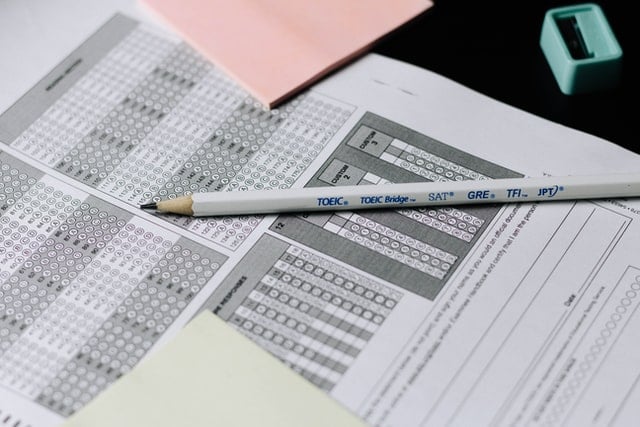
What Is A Good GPA In College?
Defining a “good” GPA depends on context.
Mathematics, engineering, technology, and science majors typically maintain lower GPAs compared to English, music, and language arts students. This difference stems from grading approaches rather than difficulty levels—humanities assignments often have multiple acceptable answers and emphasize expression, while STEM subjects rarely offer such flexibility.
Humanities majors benefit from subjective grading with multiple valid responses, whereas mathematics and science demand precise answers with limited interpretation.
Though some dismiss grades as unimportant, your GPA remains a crucial evaluation metric. Graduate and professional schools factor GPA into admissions decisions—while not the sole criterion, it frequently becomes the determining factor for many students.
High school students average approximately 3.0 GPAs (equivalent to a B or 80%), remaining relatively stable over the past decade. College students average 3.1 GPAs, with slight increases due to recent grade inflation trends.
Consequently, GPAs exceeding 3.0 in high school or 3.1 in college qualify as “good.”
Why does this matter?
Beyond previously mentioned benefits, above-average GPAs can enhance employment prospects. Most resumes don’t require GPA inclusion, but higher-than-average scores demonstrate competitive advantage. However, mediocre GPAs should remain omitted unless employers specifically request them.
While GPA represents just one assessment method among employment and admissions criteria, it frequently serves as concrete measurement for financial aid decisions—making above-average performance worthwhile.
The Importance Of A Good GPA
Grades don’t define your life’s worth, but they significantly impact your college experience. Most institutions require minimum 2.0 GPAs (4.0 scale) for graduation and federal financial aid eligibility.
Schools offering institutional aid or using GPA for athletics and activity eligibility typically require 2.5 or higher. Competitive programs like graduate assistantships may demand 3.0 or 3.5 minimums.
Maintaining above 2.0 remains essential for enrollment continuation. Falling below triggers academic probation or potential program/university dismissal.
Academic probation warns students about poor performance, and federal financial aid can be revoked when students fail to meet minimum standards for extended periods.

Regarding long-term consequences, while most employers ignore college GPAs, graduate schools consistently consider them crucial factors. Your GPA will almost certainly influence graduate school acceptance and financial aid eligibility.
How To Boost Your GPA
Various factors contribute to disappointing GPAs—if you’re struggling academically, you likely understand the underlying causes.

Consider retaking courses that significantly damaged your average. Note that repeat opportunities may be limited, especially for previously passed (though disappointing) grades.
If you’re struggling with college’s accelerated pace and increased workload, evaluate what commitments you can reduce. Are family issues, lifestyle adjustments, or health problems affecting your performance?
Utilize university resources designed to help students succeed. Whether you need writing center assistance, peer tutoring, or health services, take advantage of available support—you’re already paying for these services!
Struggling with test performance due to study challenges? Join study groups or try study apps like StudyBlue or Quizlet for flexible study options. Consider professional tutoring through your school’s programs or services like Chegg Tutors.
Avoid selecting courses solely based on expected easy grades or avoiding challenging subjects. Choose classes that genuinely interest you (plus major requirements) to maintain engagement and progress toward career goals. While grades matter, maximizing your complete college experience takes priority.
Approaching graduation with disappointing grades while planning graduate school applications? Don’t despair. Consider institutions that exclude freshman year grades from GPA calculations or don’t emphasize GPA in admissions (though such schools are increasingly rare).
A “Good” GPA Depends On Your School And Program
Uncertain about your GPA adequacy? Consult academic officials at your institution for clarification. “Good” GPA definitions vary significantly—but understanding your standing remains crucial.
Competitive programs like nursing, engineering, or pre-med often maintain exceptionally high minimum requirements. While 2.0 may preserve university enrollment, program removal occurs when GPAs drop below specific thresholds (often 3.0). Other institutions demand higher standards for institutional scholarships, sometimes requiring 2.75 or above.

Research your specific requirements thoroughly and take immediate action if improvements are needed. Raising grades becomes exponentially more difficult as semesters, years, or entire degrees progress—so act quickly to achieve your definition of academic success.


