
In today’s digital landscape, cybersecurity has emerged as a critical concern and urgent necessity. Experts suggest this year could mark a turning point for cybersecurity trends as we know them. With internet usage expanding rapidly, global connectivity creates unprecedented opportunities—but also demands constantly evolving security measures. The field offers a promising career path with strong growth potential and competitive compensation.
Whether you want to enhance cybersecurity knowledge for your marketing or graphic design business, or you’re considering a cybersecurity career, understanding the landscape is essential. Consumers and businesses face constant cyber threats, as recent history demonstrates. Cybersecurity demands high responsibility and expertise—making it perfectly suited for remote learning programs that offer flexible, accessible education.
The online courses below range from introductory tutorials to prestigious university programs with certifications. They accommodate all experience levels—from beginners to seasoned professionals seeking current knowledge. Choose the program that matches your expertise level and career goals. Let’s explore the top cybersecurity courses available online.
Oxford Home Study: 5 Levels of Diplomas
When studying a field that serves the public interest, understanding professional roles and responsibilities is crucial. This Oxford Home Study program bridges that gap while covering cybersecurity’s core objectives and functions. The program accommodates different competency levels, starting with free cybersecurity awareness training available for immediate enrollment. Beyond this foundation, five diploma levels await—all accredited by ABC Awards and Creta Awards. Graduates receive a comprehensive learner unit summary upon completion.
Level 1 Diploma

This beginner-level program requires approximately 80 hours to complete. Students explore current technology functions and limitations while familiarizing themselves with various providers, stakeholders, and affected parties. Key topics include encryption applications and an introduction to rogue software threats.
Level 2 Diploma

Like all program levels, Level 2 allows self-paced study. This diploma requires approximately 125 hours of coursework and provides certification upon completion. Students examine sophisticated cybercriminal tactics and explore preventive, proactive measures consumers can implement to avoid attacks.
Level 3 Diploma

This advanced program examines case studies from commercial and personal sectors requiring attack protection. Building on Level 2’s preventive measures, students learn to create malware-resistant defenses—the foundation of effective cybersecurity policy. The 200-hour curriculum culminates in a Certificate of Achievement.
Level 4 Diploma

Progressive learning intensifies at Level 4, requiring approximately 260 hours to develop cybersecurity mastery. This advanced program deepens industry understanding while exploring lucrative career opportunities. Students also examine cybersecurity policies implemented worldwide, preparing them for global professional responsibilities.
Level 5 Diploma
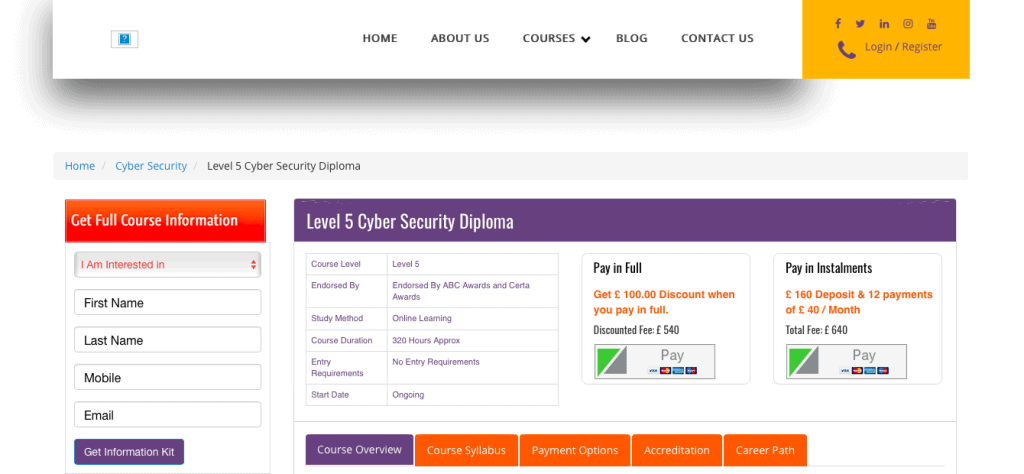
While designed for IT professionals, confident beginners can tackle this advanced program. The 320-hour curriculum equips students with comprehensive risk mitigation strategies and techniques for identifying and maintaining optimal cyber health across client systems.
Introduction to Cyber Security from Future Learn

Future Learn offers this accessible introductory program covering network security fundamentals before exploring malware, cryptography, and authentication access control. Ideal for beginners seeking basic understanding and scope overview, this course provides certification without professional-level complexity. The clear, accessible language makes complex concepts understandable. Complete the program in 8 weeks with just 24 hours of coursework. Current Future Learn unlimited subscribers can access this course within their existing package.
Arosha K. Bandara, a software engineer and network security instructor at The Open University, leads the program.
University of Maryland’s Cybersecurity Specialization via Coursera
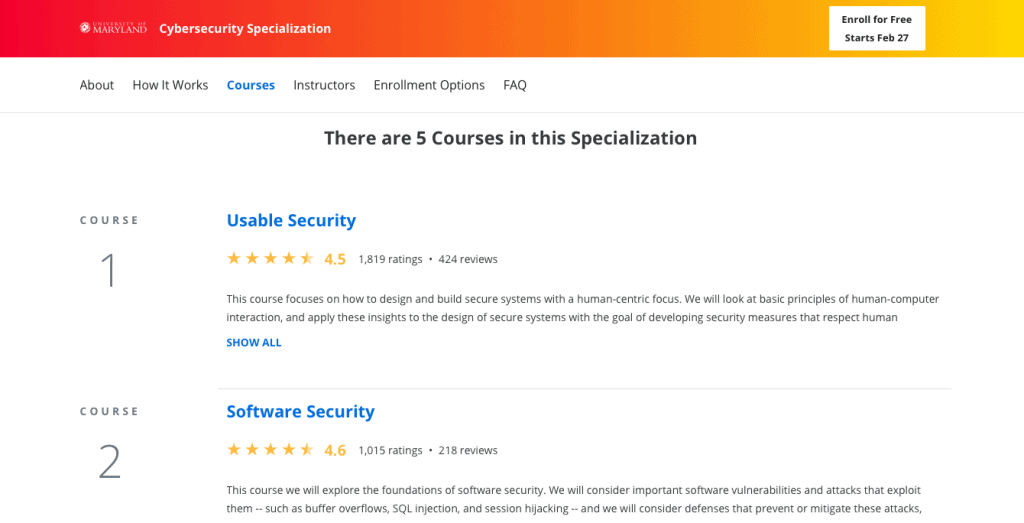
Students seeking prestigious university certification can access the University of Maryland’s specialized cybersecurity program remotely. The comprehensive 5-month curriculum features online lectures from distinguished faculty, including Jennifer Golbeck, Director of the Human-Computer Interaction Lab; professors Michael Hicks and Jonathan Katz from the Cybersecurity Center; and Associate Professor Gang Qu.
This accomplished team covers cryptography, human-computer interaction, and hardware security through engaging hands-on projects and practical demonstrations.
Complete Cyber Security Course via Udemy
Nathan House has crafted this compelling four-volume cybersecurity series addressing real-world challenges posed by our interconnected information systems. The creator promises learners will understand cyber policies while gaining practical security, privacy, and anonymity techniques.
Unlike traditional academic programs, this series targets general audiences and those interested in mastering attack diversion and surveillance avoidance techniques.
Volume 1: Hackers Exposed

This volume examines the online threat landscape and teaches techniques for defeating hacker attacks and mass surveillance. The comprehensive program includes 126 lectures totaling 12 hours of instruction.
Volume 2: Network Security

Volume 2 features 105 lectures spanning 13 hours, focusing on Wi-Fi security and network vulnerability identification through scanning and hacking techniques. This essential program addresses personal and home security needs while covering search engine security, browser protection, and tracking prevention to safeguard entire organizations.
Volume 3: Anonymous Browsing
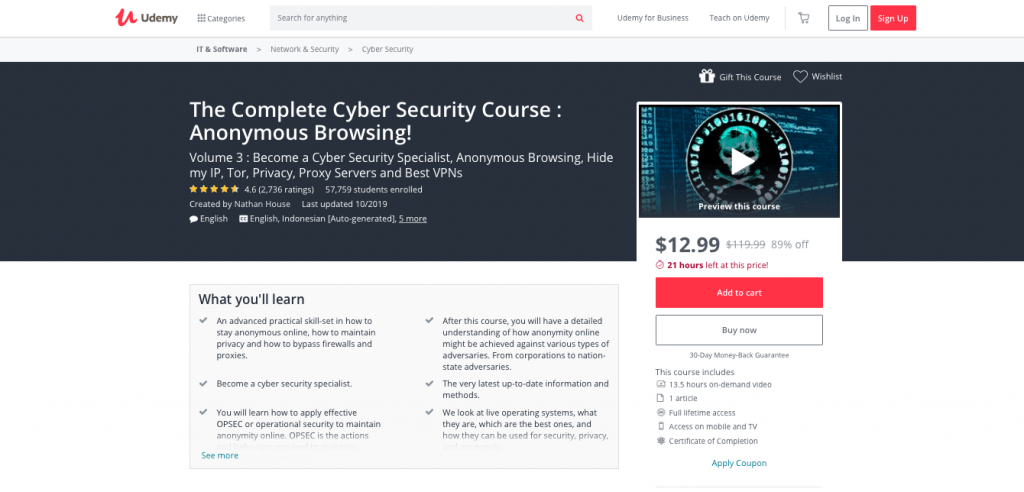
Focused on operational security, this course introduces live operating systems and essential tools like Tor, VPNs, proxies, and I2P (Invisible Internet Project). The primary objective is maintaining anonymity while staying connected online. The program covers all major platforms—Windows, iOS, and Linux. With 119 lectures across 13 hours, this standalone volume includes introductory content covering material from previous volumes.
Volume 4: Endpoint Protection
This crucial volume addresses a trending cybersecurity topic. Specialists must master defensive tactics including antivirus deployment, disk encryption, hacker detection, and malware elimination. These battle-tested techniques form the core of this diagnostic study. The comprehensive program includes 176 lectures spanning 17 hours, emphasizing threat detection and anti-forensics.
These diverse programs span diploma certifications to practical hacking skills, from prestigious university credentials to hands-on threat management—clearly demonstrating the abundant opportunities within cybersecurity’s expanding industry.
Remember to approach cybersecurity education with responsibility, focusing on protecting and addressing threats that endanger our collective information and business systems. Choose one of these outstanding online cybersecurity courses and start building professional expertise today!


