
Several qualifications can make you eligible to study accounting. While a background in mathematics and economics proves helpful, the most essential requirement is a genuine love for working with numbers. If number-crunching doesn’t excite you, perhaps consider finding courses to strengthen these skills first. That’s exactly why we’ve compiled this comprehensive guide to the finest online accounting courses available.
Top Online Accounting Courses
Digital transformation over recent decades has moved substantial amounts of learning online. For anyone who’s always wanted to explore accounting but lacked the time, online courses present the perfect opportunity. If you’re ready to transform spare time into professional development, explore these courses designed for various skill levels and career stages.
Introduction to Financial Accounting by Wharton

This certification course develops your ability to understand and analyze financial statements and disclosures in depth. Students learn how managerial incentives and accounting standards influence financial reporting. Upon completion, you’ll confidently read income statements and balance sheets while analyzing cash flow statements.
The curriculum introduces bookkeeping fundamentals and teaches how to translate transactions into debits and credits. You’ll explore income statements, examining revenues and expenses in detail. Real-world case studies bridge the gap between academic theory and industry practice. After completing the 4-week program, you’ll take a graded assessment exam. Successful completion earns you a certificate, with flexible deadlines allowing self-paced learning.
Introduction to Finance, Accounting, Modeling and Valuation
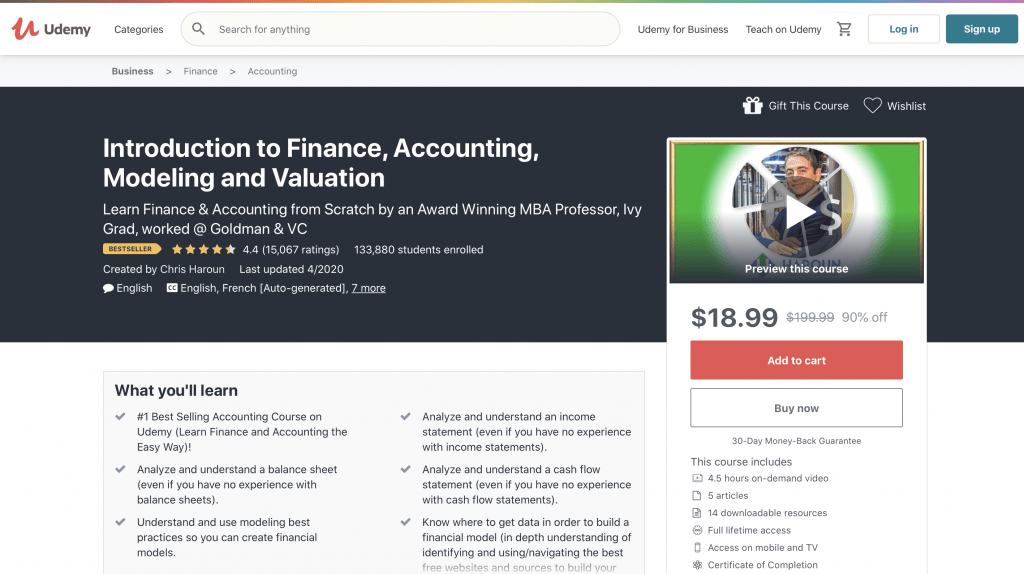
This course provides exceptional training in creating, analyzing, and forecasting income statements, balance sheets, and cash flow statements. By the end, you’ll master company valuation using methodologies actively employed on Wall Street. The instructor’s Wall Street background ensures you’re learning industry-tested techniques.
You’ll develop skills to analyze corporate and hedge fund financial statements using diverse financial ratios and formulas.
Online Master’s of Accounting
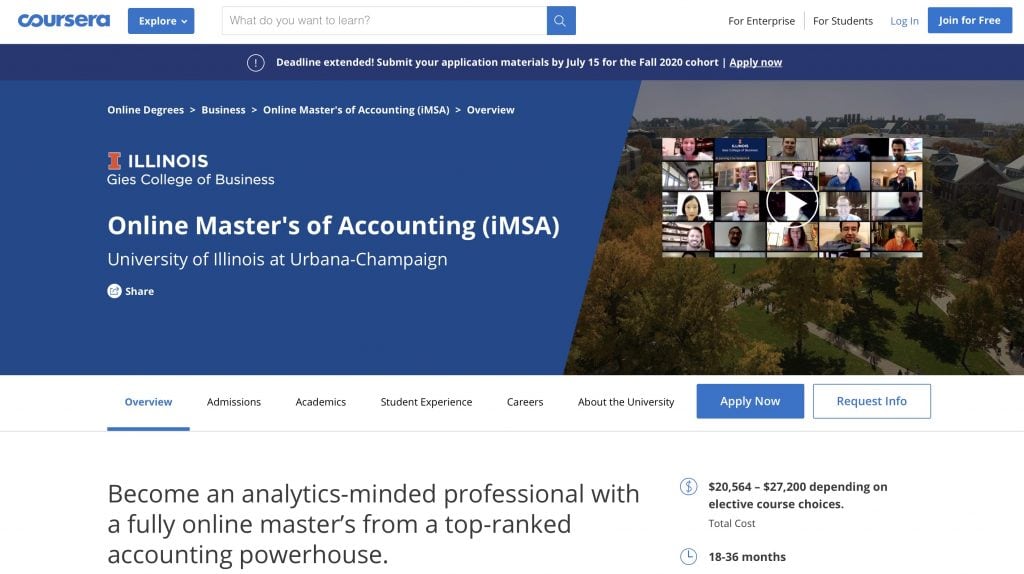
Designed for beginners and working professionals seeking to update their skills, this course addresses modern accounting demands. Today’s accountants must master programming in Python and R, conduct data mining, and perform statistical analysis and regression alongside traditional accounting skills.
This flexible program serves professionals wanting to switch industries or prepare for the CPA exam. These advanced skills can accelerate career advancement and potentially support entrepreneurial ventures. The course structure accommodates various professional development goals.
Accounting for Decision Making
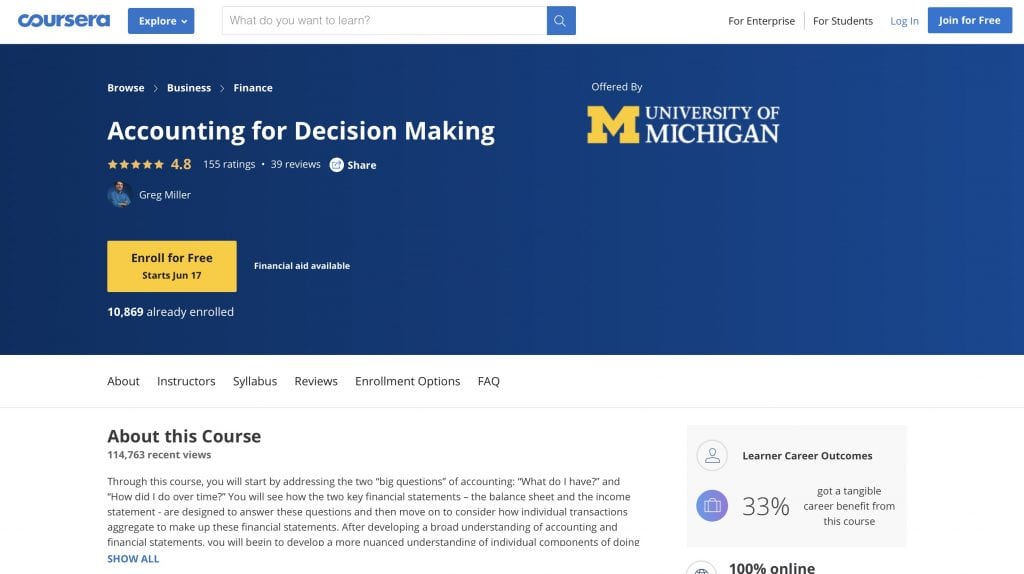
This course tackles fundamental accounting questions, helping you understand historical performance and current financial position. You’ll master individual transactions and aggregate analysis to comprehend financial statements thoroughly. The curriculum covers essential business components including sales processes and inventory management.
Students develop comprehensive understanding of company accounts and learn to apply these skills across various transactions. The program equips you to leverage financial statements as analytical tools for building meaningful ratios.
Managerial Accounting and Corporate Control
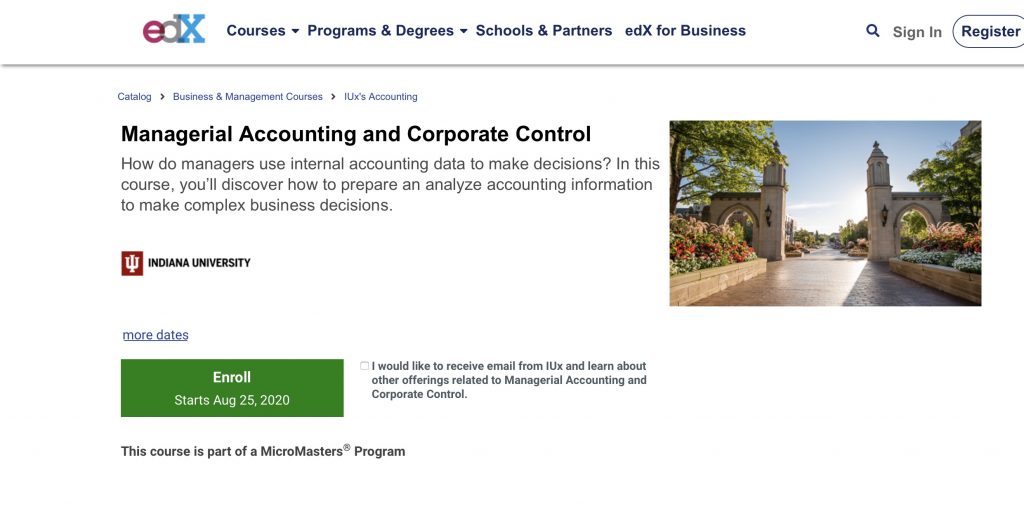
This course emphasizes measurement systems that support both decision-making and final model development. Special focus is placed on analyzing accounting information for internal decision-making processes.
Students learn to recognize the importance of internal accounting information and understand how it can be properly utilized or misused in complex decision-making scenarios. The curriculum covers developing measurement systems for planning and controlling product and service costs.
Course completion enables you to prepare fundamental financial statements, understand overhead cost impacts, and engage effectively in financial reporting processes.
Foundations of Accounting
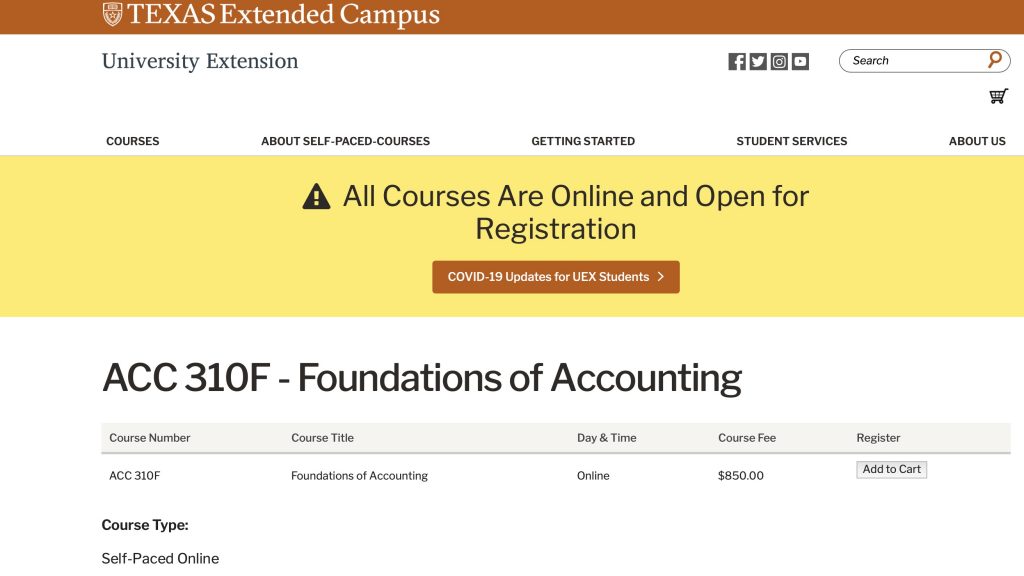
True to its name, this beginner-friendly course offers comprehensive coverage of financial and managerial accounting fundamentals. The curriculum introduces core accounting concepts including theories, reporting methods, data collection and interpretation, plus financial statement analysis.
Students explore accounting’s role in decision-making while learning to create basic financial statements and understand financial forecasts for new business ventures. The self-paced format requires completion within five months of registration, culminating in a final exam at an approved testing center.
Financial Engineering and Risk Management Part I
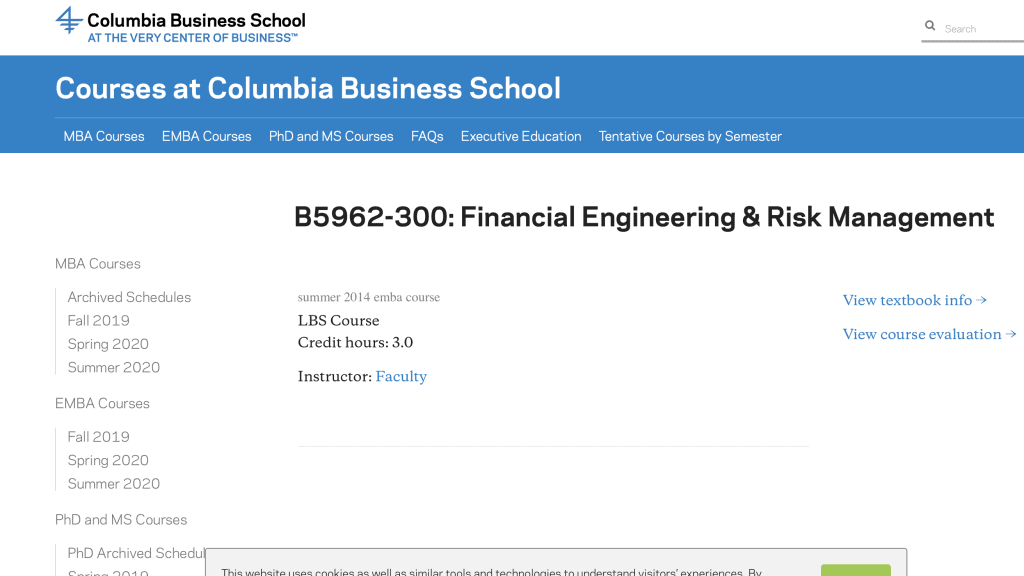
This interdisciplinary course combines finance, economics, mathematics, and engineering principles. Columbia University employs straightforward methods to explain derivative securities, covering equities, fixed income, credit, and mortgage-backed securities with applications extending beyond traditional finance.
The curriculum examines these assets’ behavior during financial crises—knowledge that’s always valuable. A standout feature includes an interview module with Emanuel Derman, bestselling author of “My Life as a Quant.”
This course marks the beginning of understanding finance and accounting’s complex landscape. It excellently demonstrates theoretical limitations in real-world applications, fostering healthy skepticism when applying these theories practically.
Conclusion: Top Online Accounting Courses
Accounting extends far beyond job prospects and earning potential, though those benefits are certainly attractive. These courses across various skill levels enhance your understanding of personal finances while providing insights into how money functions and transforms throughout our lives.
Even without career change intentions, taking one of these courses proves invaluable, particularly during uncertain economic times.


